

This article is for general education and research information. It does not provide medical advice or instructions for personal use.
Peptide therapies have moved from research laboratories into mainstream healthcare discussions, creating confusion about what is an approved medicine and what is a compounded formulation.
A patient researching peptide options may find FDA-approved treatments alongside customized products prepared by compounding pharmacies. Although both involve peptide-based ingredients, their regulatory pathways, evidence requirements, and quality controls are different.
The U.S. Food and Drug Administration (FDA) states that compounded drugs are not FDA-approved, meaning the agency does not review their safety, effectiveness, or quality before marketing.
Understanding these differences helps patients, researchers, and healthcare professionals evaluate peptide products using regulatory status and scientific evidence rather than online claims.
What Are Compounded Peptides?
Compounded peptides are customized medications prepared by licensed compounding pharmacies or qualified healthcare professionals to meet specific patient needs.
Unlike commercial pharmaceutical products, which are manufactured as standardized medicines for large patient populations, compounded medications are adjusted for individual situations.
A typical compounding process involves:
Patient requirement → Prescription from healthcare provider → Compounding pharmacy → Customized formulation
Compounding can be useful when an approved commercial medication does not meet a specific clinical need.
Examples include:
- Creating a dosage strength that is unavailable commercially
- Removing an inactive ingredient that a patient cannot tolerate
- Preparing a different medication form when appropriate
- Addressing certain medication supply issues
However, compounded peptides are not the same as FDA-approved peptide medicines. The FDA does not evaluate compounded drugs through the same premarket approval process used for commercial medicines.
This distinction is the foundation for understanding why two products containing related peptide ingredients can have very different regulatory statuses.
How FDA-Approved Peptide Medicines Reach The Market
FDA-approved peptide medicines follow a structured development pathway that can take years.
Before a peptide medicine reaches patients, researchers must demonstrate that the product has an acceptable balance between benefits and risks.
The process generally includes:
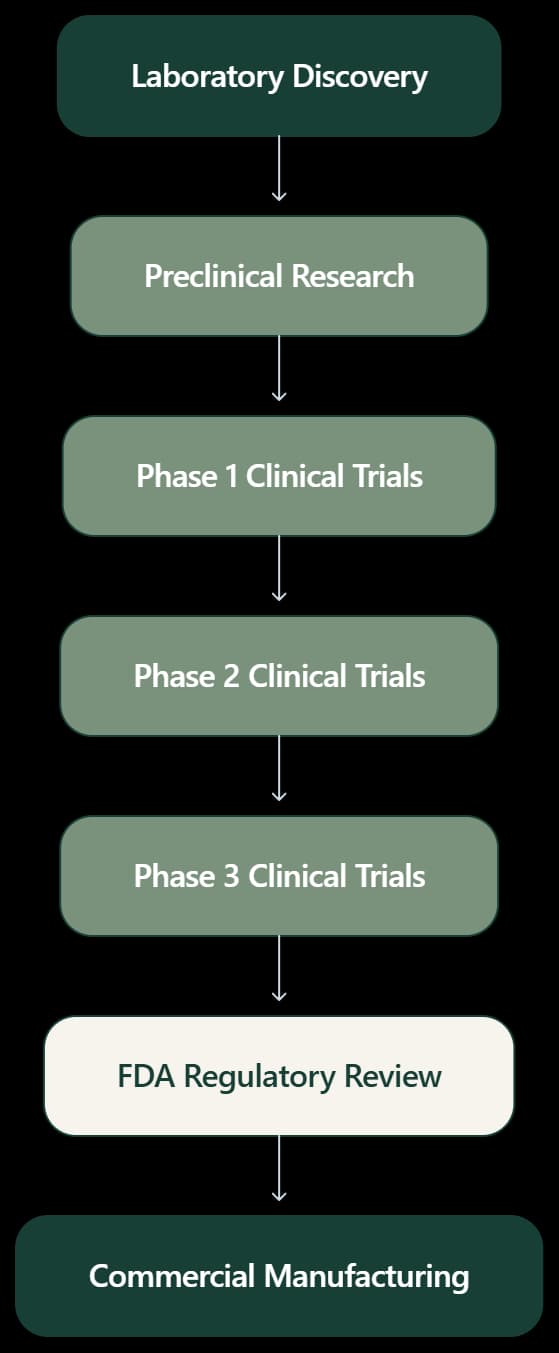
Figure: Peptide development pathway from discovery to approval, covering research, clinical trials, FDA review, and commercial manufacturing.
During this process, regulators examine:
- How the peptide works in the body
- Whether it produces measurable medical benefits
- Possible side effects and safety concerns
- Appropriate dosage information
- Manufacturing consistency
For example, insulin analogs and GLP-1 receptor agonists became approved peptide medicines after clinical research demonstrated their effectiveness for specific medical conditions.
FDA approval also applies to a specific indication. A peptide medicine approved for diabetes treatment does not automatically become approved for unrelated uses such as athletic performance, recovery, or general wellness.
A medicine’s approval status depends on the evidence submitted for that particular use.
Compounded Peptides Vs Approved Medicines Key Differences
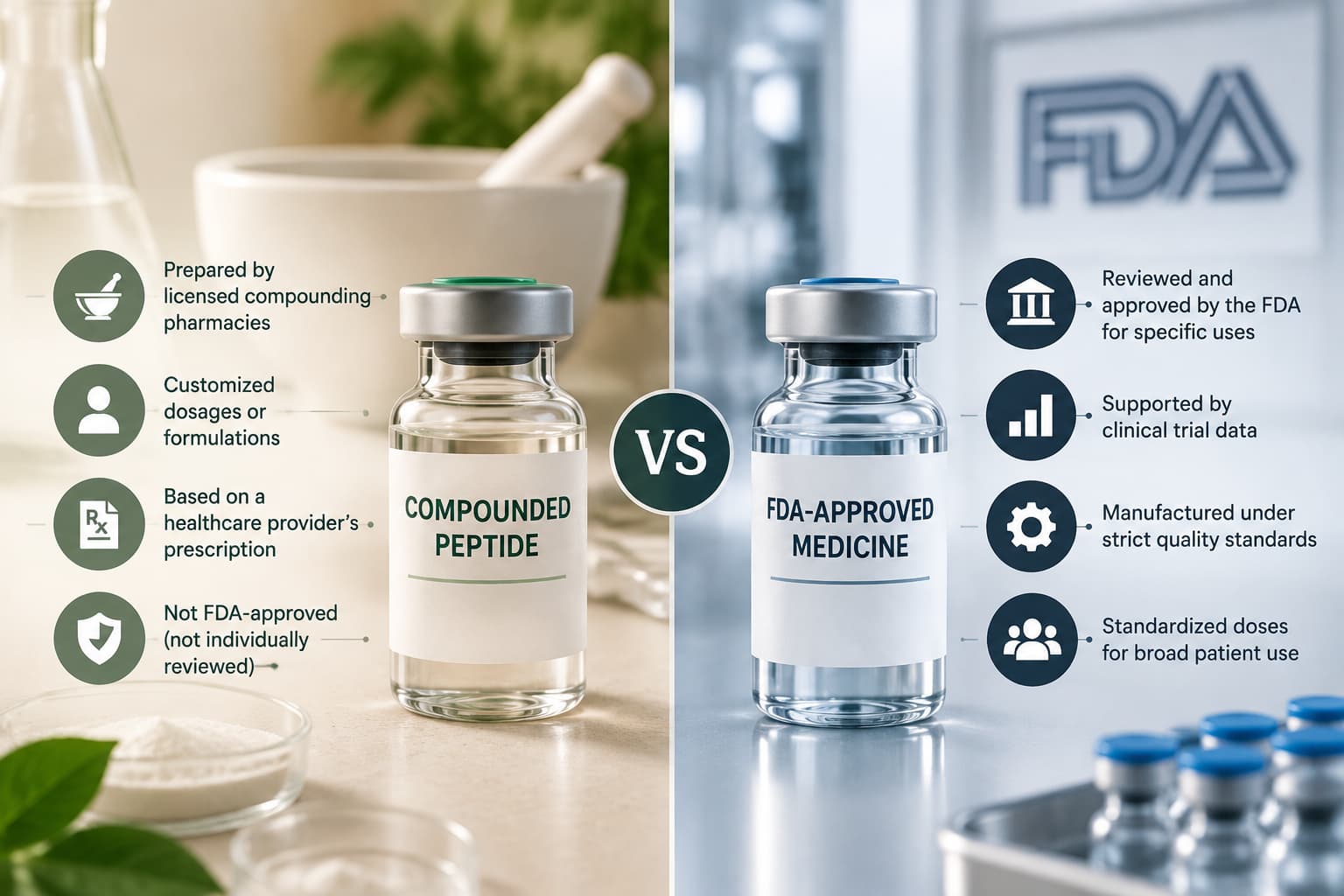
Figure 2: Compounded peptides vs FDA-approved medicines: different pathways, evidence standards, and regulatory requirements.
The difference between compounded peptides and approved medicines is mainly based on regulation, evidence, and manufacturing oversight.
| Category | Compounded Peptides | FDA-Approved Medicines |
|---|---|---|
| Regulatory status | Prepared under compounding regulations but not individually FDA-approved | Reviewed and approved by the FDA for specific medical uses |
| Clinical evidence | May have research supporting ingredients, but the finished compounded product does not undergo FDA approval review | Supported by clinical trial data submitted for regulatory approval |
| Manufacturing | Quality depends on pharmacy standards, testing procedures, and applicable regulations | Produced under validated pharmaceutical manufacturing systems |
| Dosage | Can be customized for specific patient needs | Standardized doses approved for defined indications |
| Safety information | Product-specific safety data may be limited | Includes FDA-reviewed labeling, warnings, and usage information |
| Primary purpose | Customized medication preparation | Broad treatment of approved medical conditions |
The table shows an important distinction: a compounded peptide may be useful in a specific situation, but it does not carry the same regulatory history as an approved pharmaceutical product.
Understanding 503A And 503B Compounding Pharmacies
In the United States, drug compounding is mainly governed through sections 503A and 503B of the Federal Food, Drug, and Cosmetic Act (FD&C Act).
These two categories describe different types of compounding operations.
Section 503A: Traditional Compounding Pharmacies
503A pharmacies generally prepare medications based on individual patient prescriptions.
Their primary role is customization.
Examples include:
- Adjusting a medication strength
- Preparing a formulation unavailable from manufacturers
- Modifying ingredients based on patient needs
These pharmacies are usually regulated through state pharmacy boards, along with applicable federal requirements.
Section 503B Outsourcing Facilities
503B outsourcing facilities operate on a larger scale and register with the FDA.
They may prepare compounded medicines for healthcare facilities and other approved distribution channels.
FDA oversight includes requirements related to:
- Facility standards
- Manufacturing controls
- Quality systems
- Inspections
However, FDA registration does not turn a compounded product into an FDA-approved medicine.
A 503B facility follows a different regulatory pathway from a pharmaceutical company seeking approval for a new drug.
What “Not FDA Approved” Means For Compounded Peptides
The phrase “not FDA approved” is often misunderstood.
It does not automatically describe whether a compound has scientific research behind it. Instead, it means that the specific finished product has not completed FDA review for safety, effectiveness, and quality as an approved medicine.
There are several situations where this phrase appears.
Compounded Versions Of Approved Ingredients
Sometimes pharmacies prepare products containing active ingredients that are already used in approved medicines.
In this case:
- The active ingredient may have existing clinical data.
- The compounded formulation itself is still not an FDA-approved drug product.
The ingredient and the final medication are treated differently from a regulatory perspective.
Experimental Peptides Without Approved Medical Uses
Some peptides attract attention because researchers are studying their biological effects.
However, research interest does not equal regulatory approval.
A peptide may have:
- Laboratory findings
- Animal research
- Early human studies
while still lacking enough evidence for approval.
The FDA has raised concerns about certain bulk peptide substances proposed for compounding because of issues such as limited safety information, peptide impurities, and potential immunogenicity risks.
Why Manufacturing Quality Matters For Peptide Products
Peptides are complex molecules that require careful handling during production.
Manufacturing quality affects factors such as:
- Identity confirmation
- Purity
- Stability
- Sterility
- Batch consistency
Approved pharmaceutical products are manufactured under strict quality systems, including Current Good Manufacturing Practice (cGMP) requirements.
These systems help control:
- Raw material sourcing
- Manufacturing procedures
- Laboratory testing
- Contamination prevention
- Storage conditions
For compounded peptide products, quality depends on the pharmacy’s processes, ingredient sourcing, testing standards, and applicable regulatory requirements.
Important quality checks may include:
- Active pharmaceutical ingredient (API) verification
- Certificate of Analysis (CoA)
- Sterility testing
- Endotoxin testing
- Analytical testing methods
The main issue is not simply whether a peptide exists. The important question is whether the product has consistent quality supported by appropriate controls.
GLP-1 Compounding Shows Why Regulatory Differences Matter
The discussion around compounded peptides became especially visible with GLP-1 medicines.
As demand increased for GLP-1 receptor agonists, some patients and healthcare providers explored compounded alternatives during periods when certain products faced supply limitations.
The FDA has clarified that compounding exemptions under sections 503A and 503B have specific conditions. These include restrictions on producing copies of commercially available medicines and requirements related to shortages or permitted bulk substances.
The difference is important:
An FDA-approved GLP-1 medicine has completed review as a finished pharmaceutical product.
A compounded version follows compounding regulations and does not receive the same FDA approval evaluation.
For example, during periods of supply disruption, compounding may help maintain access under certain conditions. Once those conditions change, regulatory requirements may also change.
When Approved Medicines And Compounded Peptides Are Used
Approved medicines and compounded formulations serve different purposes.
Approved Medicines Are Generally Used When
They are suitable when:
- A treatment has FDA approval for a diagnosed condition
- Clinical trial evidence supports its use
- Standardized dosing is available
- Safety information has been reviewed
These medicines provide established evidence for specific medical applications.
Compounded Formulations May Be Considered When
They may be considered when:
- A patient requires a customized formulation
- A commercial option does not meet a specific need
- A healthcare provider determines compounding is appropriate
The decision depends on individual medical circumstances and applicable regulations.
How To Evaluate Peptide Products Before Use
When researching peptide products, readers should focus on evidence and regulatory information.
Useful questions include:
- Is the peptide FDA-approved?
- What condition is it approved to treat?
- Is there human clinical evidence?
- Who manufactures the product?
- Is the pharmacy licensed?
- Are quality testing documents available?
Online popularity does not determine whether a peptide is an established medical treatment.
Regulatory status, clinical evidence, and manufacturing standards provide a clearer way to evaluate peptide products.
Understanding The Difference Before Choosing A Peptide Therapy
Compounded peptides and approved medicines serve different roles within modern healthcare. FDA-approved peptide medicines have completed clinical trials, regulatory evaluation, and manufacturing reviews for specific medical conditions.
On the other hand, compounded peptides are prepared under pharmacy compounding regulations to address specific patient needs but do not undergo the same FDA approval process as commercial medicines.
When evaluating any peptide product, understanding its regulatory status, clinical evidence, manufacturing standards, and intended use provides a clearer picture of what the product represents.
The most reliable approach is to look beyond marketing claims and focus on the evidence behind the therapy, the quality controls involved, and whether the product is supported by appropriate regulatory oversight.
FAQs
Are Compounded Peptides FDA Approved?
No. Compounded peptides are not individually FDA-approved medicines. They are prepared under specific compounding regulations.
Are Compounded Peptides The Same As Approved Medicines?
No. They may contain similar ingredients, but they differ in regulatory approval, clinical evidence, manufacturing requirements, and safety documentation.
Are Compounded Peptides Safe To Use?
Safety depends on the specific peptide, pharmacy practices, quality controls, and medical oversight.
What Is The Difference Between 503A And 503B Pharmacies?
503A pharmacies generally prepare patient-specific prescriptions, while 503B outsourcing facilities produce larger batches under FDA registration and oversight.
Why Are Some Peptides Not FDA Approved?
Some peptides have not completed the clinical studies and regulatory review required to demonstrate safety, effectiveness, and consistent manufacturing quality.
Related reading

Regulation & status
FDA-Approved Peptides vs Experimental Peptides
Learn the difference between FDA-approved peptides and experimental peptides. It includes clinical evidence, drug approval, manufacturing standards, safety risks, and peptide regulation.

Regulation & status
How the FDA Evaluates Peptide Medicines
Learn how the FDA evaluates peptide medicines through clinical trials, IND and NDA reviews, manufacturing standards, purity testing, and safety assessments

Regulation & status
What Does “Not FDA Approved” Mean?
Understand what “Not FDA Approved” means for peptides and medicines. Learn about FDA approval status, investigational drugs, compounded products, research chemicals, and regulatory differences.