
For laboratory research only. Products discussed here are not for human or veterinary use, are not medicines and are not authorised by the MHRA for any medical use. This article is general information, not medical advice.
In short
- Temperature, light and moisture all affect how quickly peptides break down chemically or clump together.
- Freeze-dried powder is generally more stable than a solution, and prefilled pens hold a solution.
- “Store in a refrigerator” means 2–8°C, and on refrigerated products it is often paired with “Do not freeze”.
- Each pen from this shop should be stored as its label and documentation state; where they give no storage condition, the shop can be asked. One product’s storage line is not a rule for every pen.
- After a temperature excursion, cold-chain guidance is to quarantine the item, record what happened and contact the supplier.
What affects peptide storage: temperature, light and moisture
Good peptide storage slows down change. A peptide is a short chain of amino acids (see what is a peptide), and that chain can alter slowly over time. A 2023 review in the journal Pharmaceutics sorts the changes into chemical ones, such as hydrolysis (the chain breaking), deamidation (a change to certain amino acids that alters the chain’s charge) and oxidation, and physical ones, such as aggregation, where molecules clump together. Either kind leaves less of the compound in its intended form.
The review lists temperature, alongside pH, as a critical parameter for most of these reactions, and notes that most peptide medicines need storage and transport at low temperatures, an arrangement known as the cold chain. A 2017 review of peptide aggregation in Interface Focus adds that aggregation often does not follow simple temperature rules, so aggregation rates measured at higher temperatures are hard to extrapolate to lower ones.
Light-induced oxidation mainly affects peptides containing tryptophan, tyrosine, phenylalanine or a disulfide bond, which is one reason many labels ask for storage in the original package. Moisture matters most for dry powders. Bachem, a peptide manufacturer, notes that peptides readily absorb water, which can lower their content and stability, and advises letting a cold container reach room temperature in a desiccator before it is opened. Bachem adds that peptides containing asparagine, glutamine, methionine, cysteine or tryptophan have limited shelf lives.
Freeze-dried powder versus solution
Many research peptides are supplied freeze-dried (lyophilised) because the dry form usually keeps better. The Pharmaceutics review notes that peptides are often unstable in aqueous solution, and describes freeze-drying with suitable stabilisers and excipients (the other ingredients in a formulation) as an apparently ideal way of keeping them intact, though one that is slow and costly. Bachem’s guidance is to keep lyophilised peptides tightly closed below −15°C for longer storage, with lower temperatures (−50°C or below) preferred for long-term storage, and it advises against long-term storage in solution.
A prefilled pen holds its peptide in solution, the less forgiving form. How it should be kept depends on its formulation and container, and only stability data for that product can settle it, so the label of that product, not a general rule, is the instruction to follow. The guide to peptide pens explained describes how a pen and its label are put together, and each compound’s chemistry and labelling are covered in the peptide guides.
What the storage terms on a label mean
European medicine labels use a fixed set of storage statements, set out in the European Medicines Agency’s guideline on declaring storage conditions (CPMP/QWP/609/96/Rev 2). Each one reflects the conditions under which the product was shown to be stable. Labels on research materials sit outside that guideline, but where they use the same phrases, it explains what those phrases normally mean.
| Label statement | What it indicates |
|---|---|
| Store in a refrigerator (2°C to 8°C) | Stability shown at 5°C ± 3°C; paired with “Do not freeze” where relevant. |
| Store in a freezer | Stability shown below 0°C; the label should give the temperature range. |
| Do not store above 25°C (or 30°C) | Stability shown in testing up to that temperature (long-term, or intermediate testing for 30°C). |
| Do not refrigerate or freeze | Cold could change the product or affect its packaging. |
| Store in the original package | Sensitive to light or moisture. |
| Keep the container tightly closed | Sensitive to moisture. |
“Room temperature” is missing on purpose: the guideline calls terms such as “room temperature” or “ambient conditions” unacceptable on labels. Part of the problem is that the term means different things in different references. According to a 2026 USP briefing, the United States Pharmacopeia currently defines controlled room temperature as 20–25°C, with excursions allowed between 15°C and 30°C, and proposes moving to the 15–25°C that the European Pharmacopoeia and the WHO use for room temperature. The Japanese Pharmacopoeia uses 15–25°C for “ordinary temperature” and defines “room temperature” as 1–30°C.
Cold terms vary too. As summarised by the ECA Academy, the European Pharmacopoeia uses 2–8°C for a refrigerator and below −15°C for a deep-freeze, while WHO guidance uses −20°C for frozen storage. The figure printed on the label is what counts, and if a label gives none, the supplier is the right place to ask.
Setting up a peptide fridge
UK cold-chain guidance gives a practical model: chapter 3 of the UK Health Security Agency’s Green Book, on storing vaccines, and the MHRA Inspectorate’s 2016 posts on refrigerated medicines. They were written for clinics and wholesalers, but their principles carry over to a laboratory:
- A dedicated fridge with no food or drink in it. The Green Book rules out domestic fridges for vaccines, and pharmaceutical fridges use a fan to keep the temperature even.
- A target of about +5°C, the midpoint of 2–8°C, which leaves a margin either side.
- Space for air to move, with nothing touching the back or side walls, where items can freeze, and no overfilling.
- A calibrated maximum–minimum thermometer that works without mains power, readable without opening the door, with its probe among the stock rather than in the door. The MHRA’s GDP Inspectorate notes that a fridge’s built-in display is usually not read from a calibrated probe.
- Readings at least once each working day: the current, maximum and minimum are recorded, the thermometer is reset, and any reading outside 2–8°C is acted on and noted.
- A ventilated spot away from heat sources, a labelled plug or switchless socket, and as few door openings as possible.
- Stock rotated so the earliest expiry date is used first.
Mini fridges and insulated transport containers
A small fridge is only as good as its measured performance. MHRA inspectors, writing for medicines wholesalers, describe mapping how temperature is spread through a unit, and suggest considering how long it holds temperature if the power is off and how much hot spells affect it.
Small fridges and powered cool boxes, whether they run from the mains or a battery, are what the WHO calls active systems: they use electricity or another fuel to hold a set temperature under a thermostat. Insulated containers and cool bags are passive systems: they hold a temperature for a finite period with a fixed amount of coolant. Either way, the same questions apply: whether the unit holds 2–8°C on an independent thermometer, how long it keeps that range in hot weather or without power, and whether items are kept away from cold walls and cool packs.
The MHRA notes that validated insulated containers suit small volumes of lower-risk products on journeys of under three hours, and that cool packs must not touch the product. The Green Book warns that frozen packs can freeze the contents, and advises keeping items in their original packaging, wrapped in bubble wrap, with the temperature inside the cool box monitored.
A storage case or organiser used inside a fridge keeps items tidy and labelled, but it does not control temperature. It should not block air movement or press items against the back or side walls, and items labelled “Store in the original package” stay in their box.
Labelling and logging
Good records make a temperature problem answerable later. WHO guidance lists what to check when stock arrives, including the product name, batch number, quantity, damage, expiry date, transit delays and whether the required storage conditions were maintained. A laboratory log can follow the same pattern:
- Product name, labelled content and batch number.
- Date received and the condition on arrival.
- Which fridge and shelf the item is in.
- Any date the label or documentation asks to be recorded.
- The temperature log for that fridge.
Out-of-date items should be clearly labelled and taken out of the working stock, as the Green Book recommends.
If peptides get too warm or freeze: temperature excursions
The WHO defines a temperature excursion as any exposure to temperatures outside the range set for storage or transport. Typical causes are a fridge door left open, a power cut, a parcel left somewhere warm, or an item frozen against a fridge wall. Cold-chain guidance is consistent about what follows:
- Keep the fridge door closed while the situation is assessed.
- Separate the affected items, keep them under their labelled conditions and mark them clearly as quarantined.
- Record the last reliable reading, the highest or lowest temperature reached, roughly how long the items were out of range, and the likely cause.
- Check the label and any documentation for what they say about excursions.
- Contact the supplier with the batch number and those details. In replies on the Inspectorate blog, the MHRA’s GDP Inspectorate advises assessing a deviation by both temperature and time out of range, and obtaining the manufacturer’s advice on the likely impact on the product.
The Green Book explains why guessing is unwise: stability data outside a product’s registered range may not have been reviewed by a regulator, so each case has to be judged on the evidence available for that product.
How long can peptides be out of the fridge?
There is no single answer. It depends on the compound, the formulation, the container, how warm it became and for how long, and only stability data for that product gives a reliable figure. If the label or documentation gives an allowance, that is the limit. Otherwise the time and temperature should be recorded, the item quarantined under its labelled conditions and the supplier asked.
A calculation does not settle it either. MHRA inspectors, writing about wholesale, discourage relying on mean kinetic temperature (a single calculated figure meant to sum up a varying temperature) unless an acceptable value has been provided for that specific product.
Peptide pen storage: pens from this shop
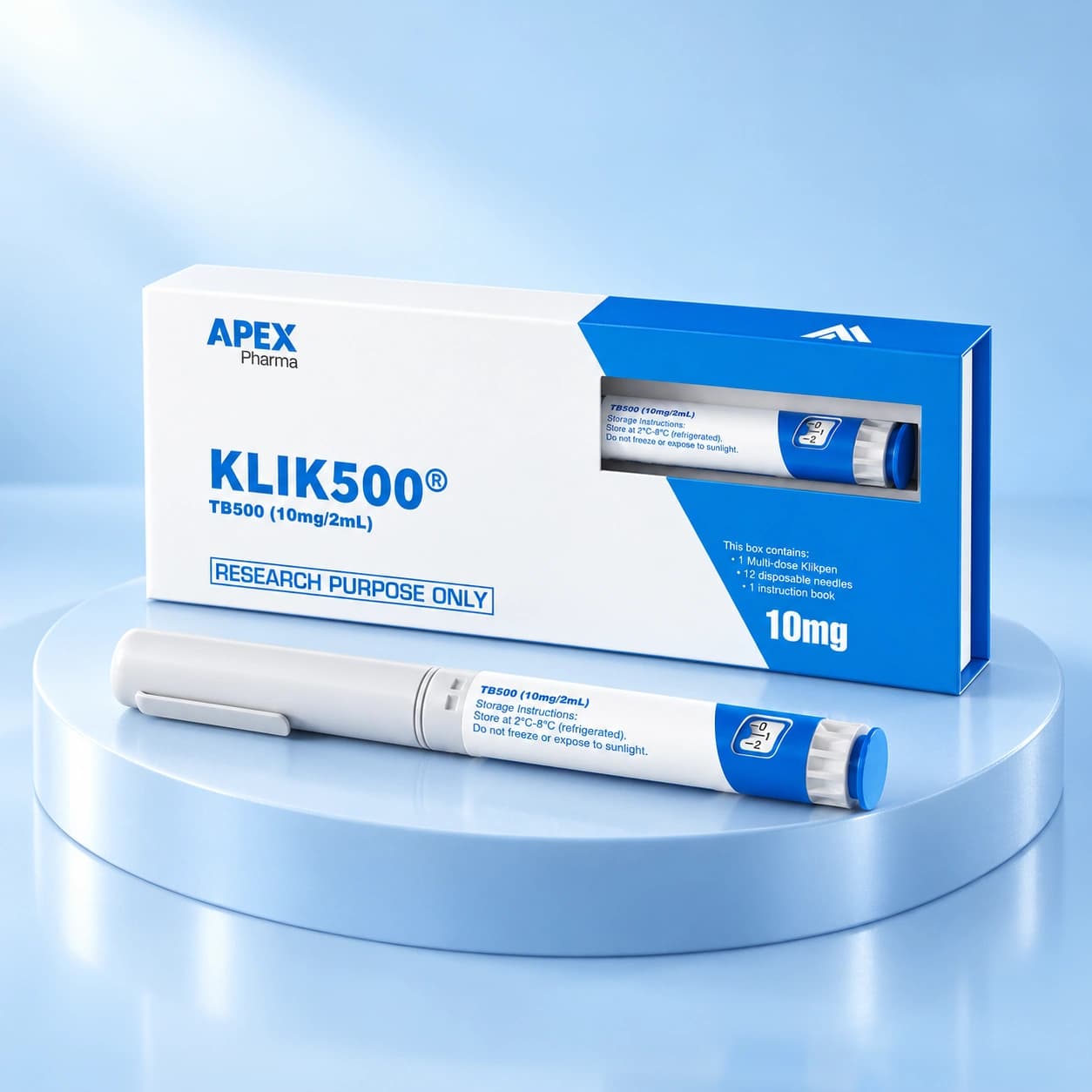
Each pen should be stored exactly as its own label and documentation state. A storage line on one product’s label or listing applies to that product only and is not a rule for other pens. In the product photographs, for example, the labels on the BPC-157 10mg pen and the TB-500 10mg pen read “Store at 2°C–8°C (refrigerated). Do not freeze or expose to sunlight.” That line belongs to those pens, and the label on the item supplied is the one that applies. Product pages do not give a storage line for every pen, so where a label gives no storage condition, the shop can be asked.
Orders are dispatched Monday to Friday in temperature-controlled packaging designed to help keep products cool in transit. Guidance that MHRA inspectors wrote for medicines wholesalers, used here only as general cold-chain practice, is to check refrigerated deliveries in as a priority: confirming the contents are not warm to the touch and that no cool pack has touched the product, and moving items labelled for refrigeration into the fridge straight away.
If a label is missing, damaged, unclear or gives no storage condition, or an item has become too warm or frozen, please contact the shop with the order number, the batch number on the pack and any temperature details recorded. Until there is a reply, the item is best kept in its original packaging, under its labelled conditions where the label gives them, and away from heat and direct light.
The batch number on the pack is also the detail to compare with the published lab reports by batch. Those reports cover the samples the laboratory tested, and not every product has one. The article on peptide testing and certificates of analysis explains what those reports cover.
Frequently asked questions
Do peptides need to be refrigerated?
Not all of them, and the label decides. A pen labelled 2–8°C belongs in a refrigerator, while some products carry the opposite instruction, “Do not refrigerate or freeze”. Bachem notes that freeze-dried peptides may be shipped at room temperature but should be kept tightly closed below −15°C for longer storage, and it advises against long-term storage in solution, the form a prefilled pen holds. For a pen, the label is the instruction.
What does 2–8°C mean on a label?
It means storage in a refrigerator. Under the European Medicines Agency’s storage guideline, “Store in a refrigerator” is used for products shown to be stable at 5°C plus or minus 3°C, and it is often paired with “Do not freeze”. Aiming for about 5°C leaves a margin either side.
How long do peptides last in the fridge?
The expiry date on the label is the limit, and it assumes the item has been kept under its labelled conditions the whole time. Under the EMA guideline, a medicine’s storage statement reflects its stability testing; for research products, the label and the supplier’s documentation are the reference. If a label gives no expiry date or storage condition, the supplier is the one to ask.
Can peptide solutions or pens be frozen to make them keep longer?
Only if the label says so. Freezing is one of the stresses that can make peptides aggregate, and labels for refrigerated liquids often say “Do not freeze”. Storage advice differs between products and forms, which is why the instruction for the specific product matters. A pen that has frozen by accident should be quarantined and the supplier contacted.
Is a mini fridge or insulated container suitable for refrigerated research materials?
It can be, if it holds the labelled range. A small fridge should be checked with an independent maximum–minimum thermometer before it is loaded, with readings logged each working day. MHRA inspectors, quoting UK wholesale guidance, note that a small fridge described as medical or pharmaceutical is not automatically suitable, and the Green Book rules out domestic fridges and domestic cool boxes for vaccines. An insulated container keeps items cool only for a finite period, and cool packs should not touch the product.
Where in the fridge should peptides be kept?
On a shelf with space for air to move, away from the back and side walls where items can freeze, and in the original packaging where the label asks for it, since that packaging often protects against light.
Products mentioned
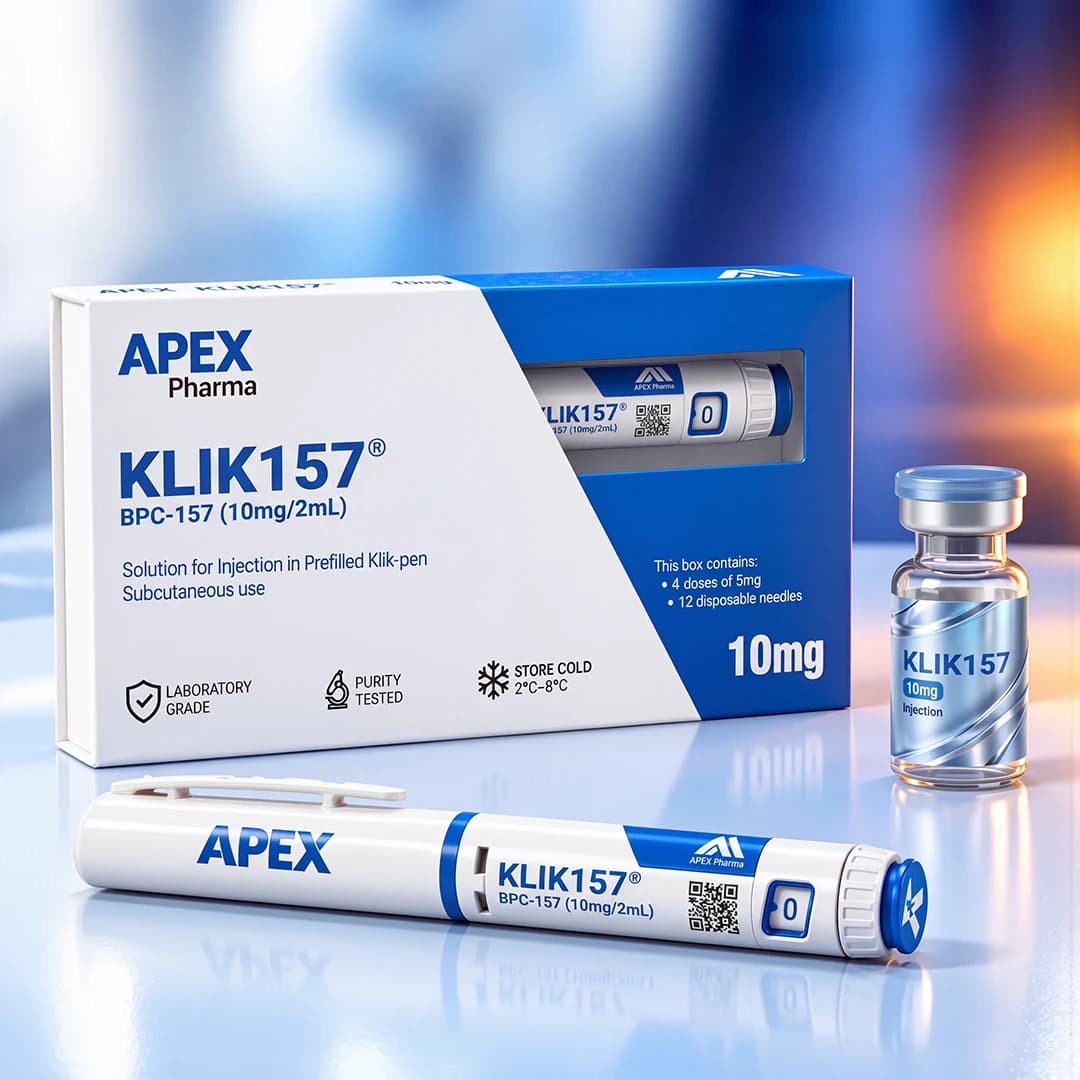
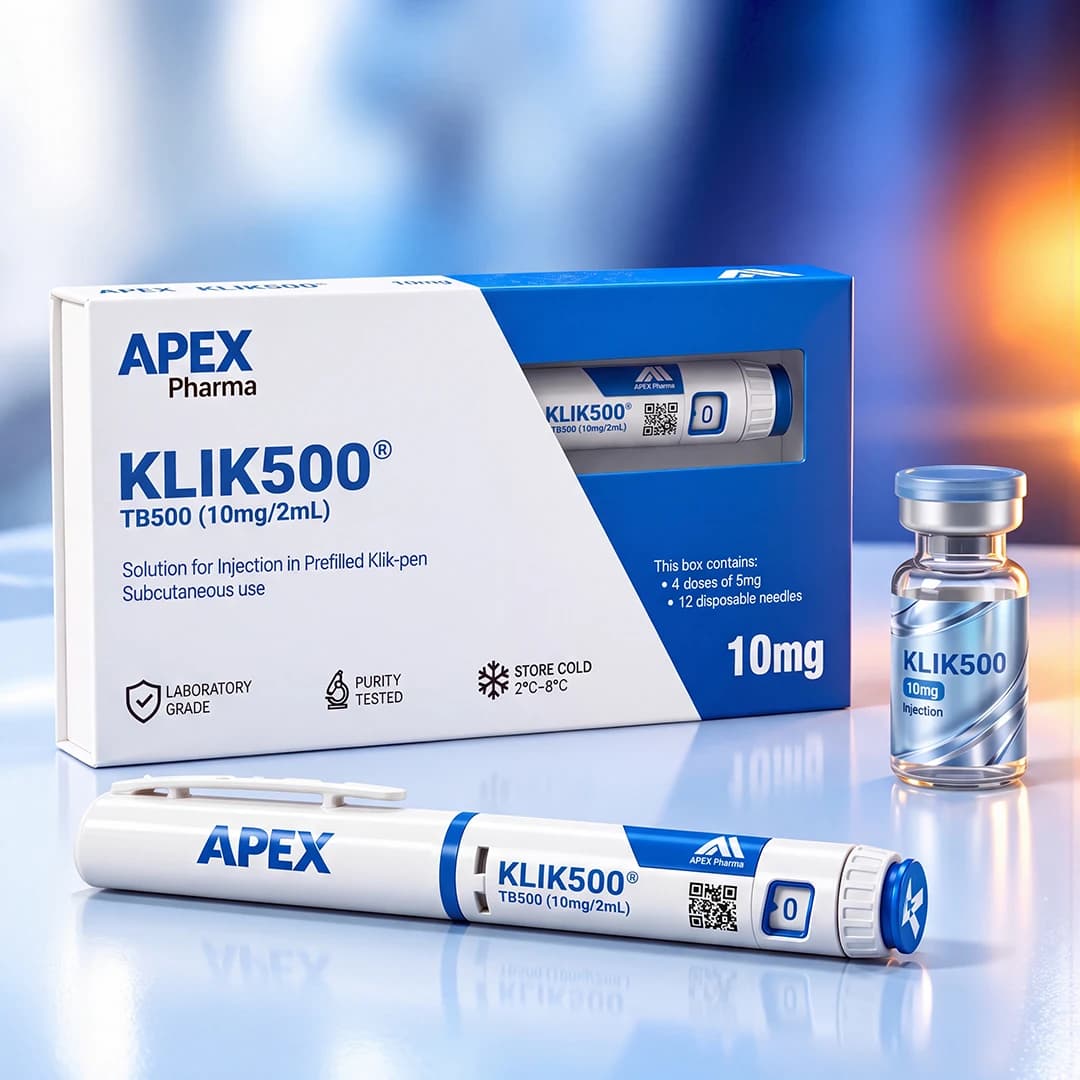
These are commercial links to our catalogue. Products are supplied for laboratory research only, not for human or veterinary use.
Related reading

Pens & handling
Peptide pens explained: how prefilled research pens are built and labelled
A plain guide to how prefilled research peptide pens are built and labelled, and how they compare with vials on labelling, handling and documentation.

Quality & testing
Peptide testing in the UK: how to read a certificate of analysis
What peptide testing can and cannot show: HPLC purity, mass spectrometry, content, endotoxin and sterility tests, how to check a certificate of analysis against the product, and how to choose a laboratory in the UK.
Peptide science
Bacteriostatic water explained: what bac water is and how it differs from sterile water
Bac water is sterile water with a benzyl alcohol preservative. This guide sets out what its labels say about its make-up, containers, storage and cautions, how it differs from Water for Injections and saline, and where it stands in the UK.
Sources & evidence
These sources support the statements in this article. Each one describes its own subject, method or rule; none of them tested or certifies Maylene products.
- Guideline on declaration of storage conditions (CPMP/QWP/609/96/Rev 2) — European Medicines Agency, 2007
The standard EU labelling statements for storage conditions and the stability testing conditions each one reflects.
Regulator · Checked
- Storage, distribution and disposal of vaccines: the Green Book, chapter 3 — UK Health Security Agency (chapter dated June 2013)
UK guidance on refrigerator storage, temperature monitoring, cool boxes and cold-chain failures for vaccines; used here only for general cold-chain practice.
Regulator · Checked
- Refrigerated medicinal products, part 1: receipt and storage — MHRA Inspectorate blog, 2016
Inspectorate advice to wholesalers on receiving, storing and monitoring refrigerated medicines, with GDP Inspectorate replies in the comments on fridge displays and temperature deviations.
Regulator · Checked
- Refrigerated medicinal products, part 2: transportation, packing and temperature management — MHRA Inspectorate blog, 2016
Inspectorate advice on insulated containers, cool-pack placement, temperature records and mean kinetic temperature for refrigerated medicines.
Regulator · Checked
- Model guidance for the storage and transport of time- and temperature-sensitive pharmaceutical products (TRS 961, Annex 9) — World Health Organization, 2011
Definitions of storage temperature, active and passive systems and temperature excursions, with arrival checks and quarantine for temperature-sensitive products.
Standard or pharmacopoeia · Checked
- 〈659〉 Packaging and Storage Requirements, revision briefing — United States Pharmacopeia, 2026
States USP’s current controlled room temperature definition (20–25°C, excursions 15–30°C) and a proposal to lower it to 15–25°C to align with other pharmacopoeias and the WHO.
Standard or pharmacopoeia · Checked
- The Japanese Pharmacopoeia, 18th edition (JP XVIII), English version: General Notices — Pharmaceuticals and Medical Devices Agency, 2021
The official Japanese definitions of standard, ordinary and room temperature and of a cold place.
Standard or pharmacopoeia · Checked
- What are the regulatory definitions for “ambient”, “room temperature” and “cold chain”? — ECA Academy, 2017
Secondary summary of European Pharmacopoeia, WHO, USP and Japanese Pharmacopoeia temperature terms; the official texts govern.
Reference · Checked
- Designing formulation strategies for enhanced stability of therapeutic peptides in aqueous solutions: a review — Nugrahadi et al., Pharmaceutics, 2023
Literature review of chemical and physical degradation of peptides in solution and the roles of pH, temperature, light and freeze-drying. It did not study products sold by this shop.
Peer-reviewed paper · Checked
- Factors affecting the physical stability (aggregation) of peptide therapeutics — Zapadka et al., Interface Focus, 2017
Literature review of what drives peptide aggregation, including temperature, agitation, surfaces and freeze-drying. It did not study products sold by this shop.
Peer-reviewed paper · Checked
- Handling and storage guidelines for peptides — Bachem
A peptide manufacturer’s laboratory guidance on storing and shipping freeze-dried peptides and peptide solutions, including moisture uptake, storage temperatures and residues that limit shelf life.
Reference · Checked