
This article is for general education and research information. It does not provide medical advice or instructions for personal use.
Key Takeaway:
- Peptides are short chains of amino acids that serve as the building blocks of proteins. They act as vital messengers, signalling cells to perform specific tasks
- Different peptides have different functions.
- Peptides, proteins, and collagen supplements are not interchangeable.
Peptides appear in very different places. You may see the word on a collagen powder, a skincare label, a prescription medicine, a wellness-clinic menu or a vial sold online as a “research” product.
That shared name can be misleading. A dietary collagen product, insulin and an unapproved injectable compound may all involve peptides, but they are not interchangeable. They have different structures, purposes, evidence and risks.
The simplest peptide definition is this: a peptide is a short chain of amino acids joined by peptide bonds (--CO–NH–). The sequence of those amino acids helps determine the peptide’s shape, chemical behaviour and biological function. Many peptides made by the body act as hormones or signalling molecules. Others take part in immune defence, nervous-system communication and normal tissue regulation. Scientists can also manufacture peptides for research or use them as medicines.
This guide explains peptide science from the molecular level upward. It does not provide dosing, injection, or treatment instructions.
The name peptide describes molecular structure. It does not show whether a product is effective, FDA-approved (Food and Drug Administration), suitable for human use, or safe for a particular person.
What Is a Peptide?
Amino acids are small organic molecules used to build peptides and proteins. Twenty standard amino acids commonly occur in human proteins, and each has a different side chain that affects its chemical properties.
When amino acids connect in a particular order, they form a sequence that can differ from another chain containing the same building blocks in a different order.
| Term | Simple definition | Typical example |
|---|---|---|
| Amino acid | An individual molecular building block | Glycine |
| Peptide | A short amino-acid chain | Oxytocin |
| Polypeptide | A longer continuous chain | One protein chain |
| Protein | One or more folded chains with a biological function | Haemoglobin |
How Peptide Bonds Form
The link between two amino acids is called a peptide bond, or amide bond (--CO–NH–). It forms when the carboxyl group of one amino acid reacts with the amino group of another. A molecule of water is released during this condensation reaction.
Once an amino acid becomes part of the chain, scientists call it an amino acid residue. A chain has an amino end, known as the N-terminus, and a carboxyl end, known as the C-terminus. The order from one end to the other is the peptide’s primary sequence.
A simple way to picture the process is:
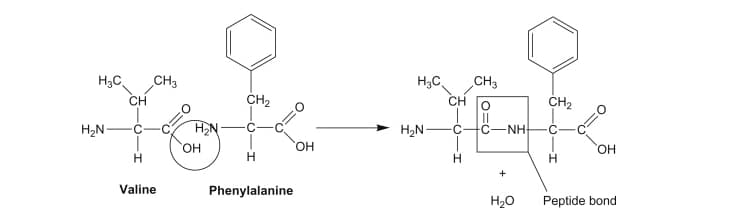
Amino acid + amino acid → peptide bond → short amino acid chain
The chain can continue growing as more amino acids are added.
How Many Amino Acids Are in a Peptide?
There is no single boundary used in every scientific context. A common biochemical convention describes a peptide as a chain of about 2 to 50 amino acids. Other sources use a lower cutoff or consider features such as folding, stability, and biological function alongside length. A StatPearls overview hosted by the NCBI Bookshelf describes peptides as chains of 2–50 amino acids, although other scientific and regulatory definitions use different boundaries.
Some useful terms are:
- Dipeptide: two amino acid residues
- Tripeptide: three residues
- Oligopeptide: a relatively short chain
- Polypeptide: a longer continuous amino acid chain
These labels describe chain length. They do not tell you whether the molecule is beneficial, harmful, approved as a medicine, or biologically active.
How Do Peptides Work in the Human Body?
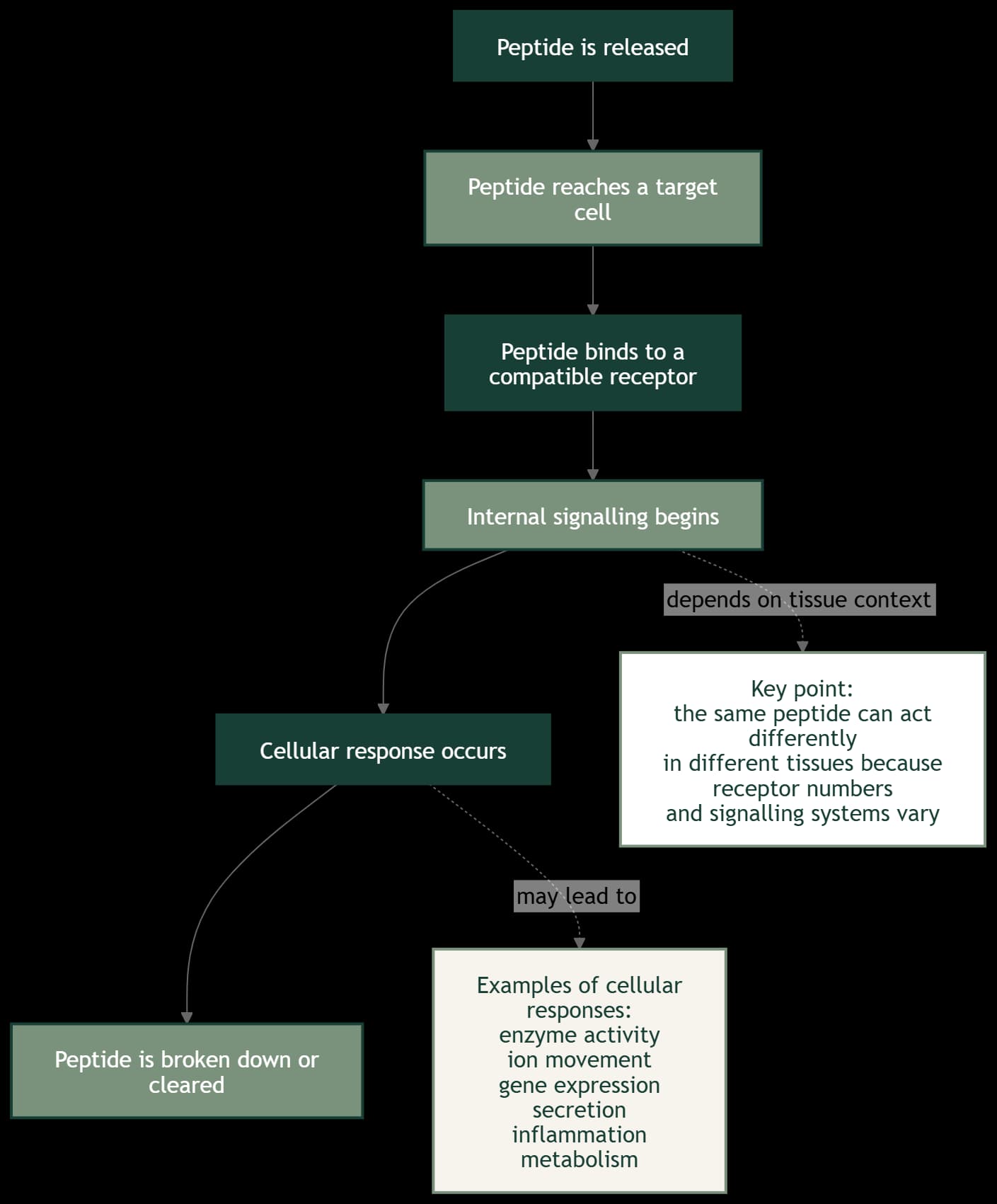
Figure 1: How peptide signalling works in the human body: a peptide reaches a target cell, binds to a compatible receptor, triggers internal signalling, produces a cellular response, and is then broken down or cleared.
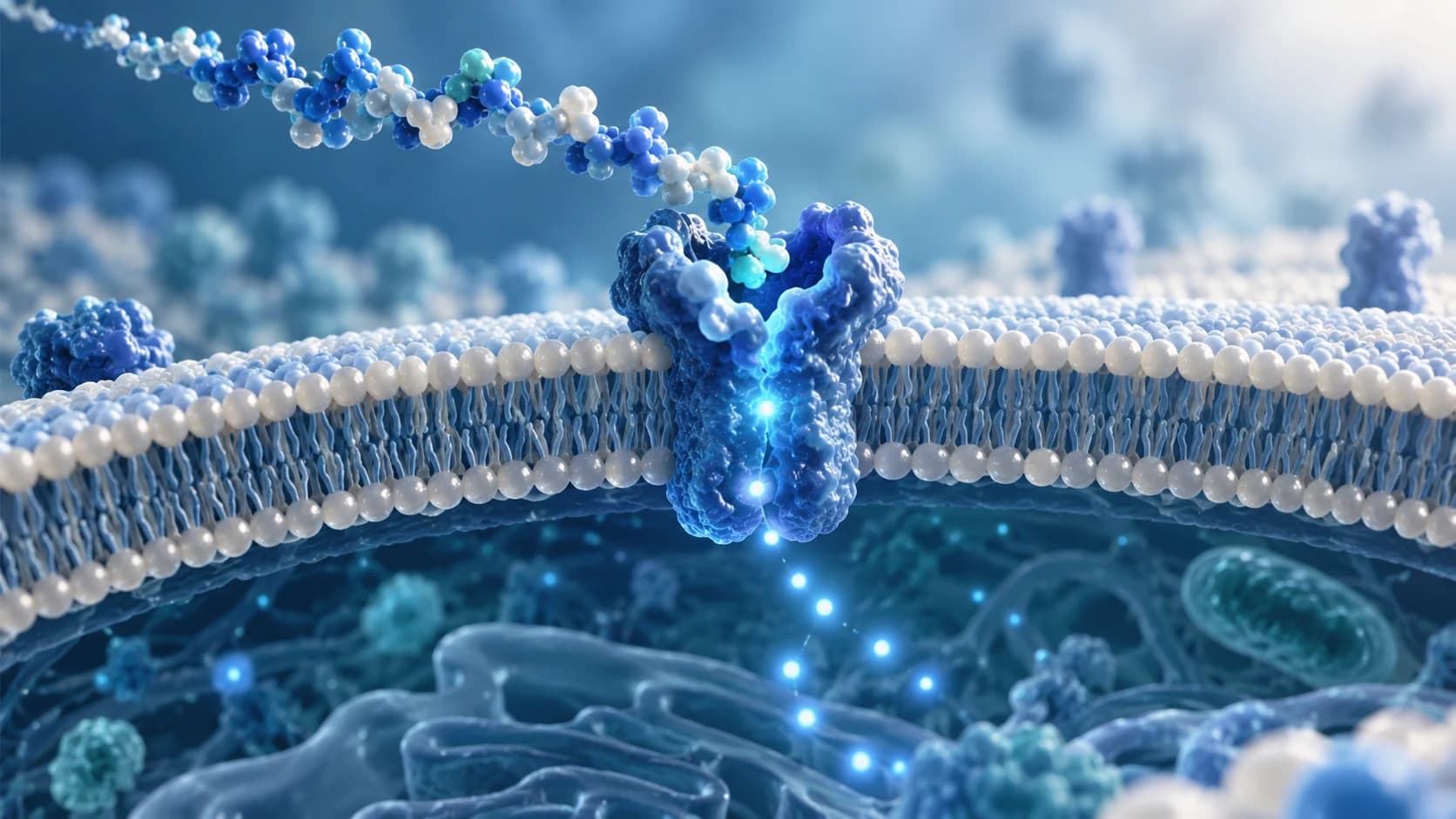
Many peptides work by carrying information between cells. A cell releases a peptide, the peptide reaches a target cell, and it binds to a receptor that can recognise it. That binding changes the receptor’s shape or activity, which starts a series of events inside the cell.
The process can be summarised as:
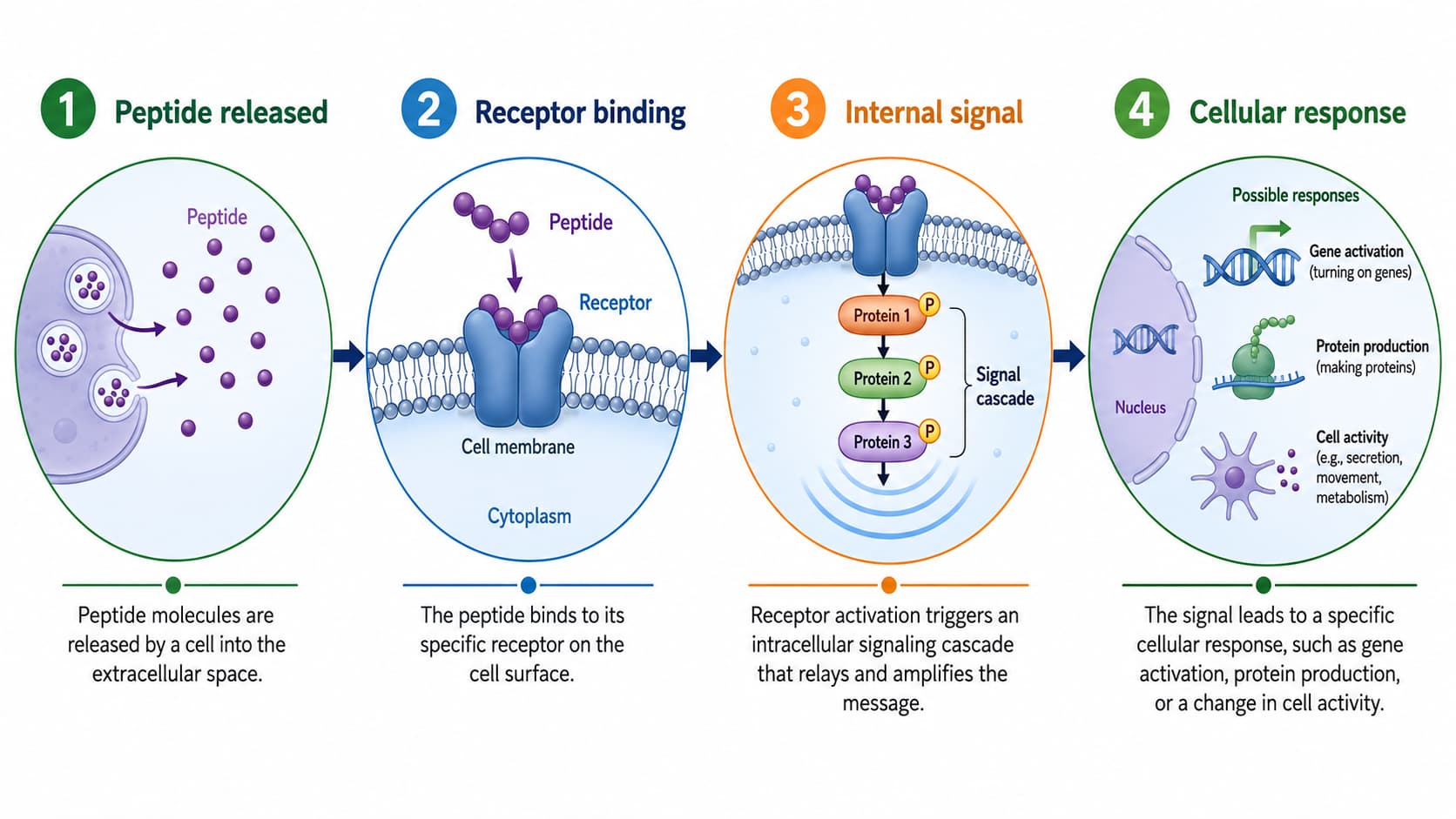
Peptide released → receptor binding → internal signal → cellular response
The resulting response may change enzyme activity, ion movement, gene expression, secretion, inflammation, or metabolism. The same peptide can produce different effects in different tissues because receptor numbers and internal signaling systems vary.
Many peptide hormones are water-soluble and cannot pass freely through the cell’s fatty outer membrane. Instead, they bind to receptors on the cell surface. The receptor then transfers the message inward through signalling proteins, enzymes, ions, or molecules called second messengers. G-protein-coupled receptors are one important receptor family, but they are not the only receptors used by peptide signals.
A peptide does not produce an effect merely because it reaches the body. Its activity depends on several details:
- Its amino acid sequence and three-dimensional shape
- Whether a compatible receptor is present
- How strongly it binds to that receptor
- Which tissues contain the receptor
- The amount of peptide that reaches those tissues
- How quickly enzymes break the peptide down
- Whether the peptide activates, blocks, or modifies a pathway
This is why two peptides of equal length may have unrelated effects. Evidence about insulin cannot support a claim about BPC-157 simply because both are described as peptides (made up of amino acids).
What Do Peptides Do?
There is no universal “peptide function.” Each peptide must be considered as an individual molecule. Some act as hormones, some help neurons communicate, some form part of innate immune defence, and some have functions that are still being studied.
| Peptide | General role or category |
|---|---|
| Insulin | Peptide hormone involved in glucose regulation |
| Glucagon | Peptide hormone involved in glucose regulation |
| Oxytocin | Peptide hormone and signalling molecule |
| Vasopressin | Peptide hormone involved in water regulation |
| CGRP | Neuropeptide involved in sensory pathways |
| Defensins | Antimicrobial peptides |
| GLP-1 | Naturally produced peptide hormone involved in glucose and appetite signalling |
These peptides are just for informational these are not recommended for treatment
Hormone and Metabolic Regulation
Insulin is a peptide hormone produced by pancreatic beta cells. It helps regulate blood glucose by signalling tissues to handle and store nutrients. Glucagon, another pancreatic peptide hormone, has a different role in glucose regulation.
Oxytocin and vasopressin are short peptide hormones that differ by only two amino acids, yet they act through different receptors and have distinct physiological effects. This is a clear example of why small changes in sequence can matter.
GLP-1 is another naturally produced peptide hormone. It supports glucose-dependent insulin release, slows gastric emptying, and contributes to appetite signalling. Medicines designed to act on the GLP-1 receptor are one specialised part of the much larger peptide category; their evidence cannot be applied to unrelated peptides.
Nervous-System Communication
Neuropeptides are peptides used by neurons or other cells in the nervous system. They can influence pain signalling, appetite, stress responses and other functions.
Calcitonin gene-related peptide, usually shortened to CGRP, is a 37-amino-acid neuropeptide found in sensory nerve pathways in the central and peripheral nervous systems.
Endorphins are another familiar group of peptide messengers. They interact with opioid receptors and participate in pain, stress and reward pathways. Their existence does not mean that an external peptide product will reproduce the same response; delivery, receptor activity and dose all matter.
Immune Defence
Some peptides act directly against microbes. Defensins and cathelicidins are antimicrobial peptides found in components of the innate immune system. They include epithelial surfaces and immune cells. They help provide an early defence against pathogens.
This biological role is sometimes turned into a broad marketing claim that “peptides support immunity.” That statement is too vague to be useful. An endogenous antimicrobial peptide and an orally consumed collagen fragment are different molecules with different routes and functions.
Digestion and Communication Between Organs
Peptide hormones help the stomach, intestines, pancreas, brain and other organs coordinate digestion and nutrient handling. They may influence enzyme release, gastric movement, appetite or insulin secretion.
The important point is specificity. A peptide involved in one pathway does not automatically affect every nearby process, and a laboratory observation does not establish a useful health effect in people.
Peptides vs Proteins: What is the Difference?
Peptides and proteins are built from the same basic material: amino acids linked by peptide bonds. The main differences usually involve chain length, folding, and structural complexity.
| Feature | Peptides | Proteins |
|---|---|---|
| Basic material | Amino acids | Amino acids |
| Typical size | Shorter chains | Usually longer chains |
| Structure | May be linear, cyclic or partly folded | Often folds into a more complex three-dimensional structure |
| Common roles | Signalling, regulation, defence and other specialised functions | Enzymes, transport, structure, signalling and many other functions |
| Boundary | No completely universal cutoff | Defined by more than chain length alone |
A protein’s amino acid sequence determines how it folds, and that final shape is closely tied to its function. Peptides can also adopt defined shapes, including cyclic structures, but they are generally smaller and less structurally elaborate than large proteins.
Size alone does not mean a peptide is easily absorbed. Many peptides are polar, vulnerable to digestive enzymes and unable to cross biological membranes efficiently. Recent pharmaceutical reviews continue to identify enzymatic degradation, low intestinal permeability and poor oral bioavailability as central problems in oral peptide delivery.
You can learn about Peptides vs Proteins for a fuller comparison of chain length, folding and function.
Natural, Dietary, Synthetic and Therapeutic Peptides
The word “peptide” describes a molecular form, not a single product category. Separating the main categories helps prevent false comparisons.
| Peptide category | Source | Example | Important distinction |
|---|---|---|---|
| Endogenous | Produced by the body | Insulin | Natural production does not create a universal safety rule |
| Dietary | Produced through food digestion or hydrolysis | Collagen peptides | Not equivalent to a peptide medicine |
| Synthetic | Manufactured in a laboratory | Compound-specific | May copy or modify a natural sequence |
| Approved medicine | Reviewed as a specific drug product | Certain insulin products | Approval applies to the exact product and use |
| Experimental | Under investigation | Compound-specific | Effectiveness and safety may remain uncertain |
| Research chemical | Sold for laboratory use | Product-specific | The label does not establish human safety or quality |
Peptides Made Naturally by the Body
Endogenous peptides are produced inside the body. Insulin, glucagon, oxytocin, vasopressin, and many neuropeptides fall into this group. Cells often make them first as longer precursor molecules, then cut those precursors into the active form.
Natural origin does not create a general safety rule. A substance can be essential at one concentration and harmful at another. Its effects also depend on where it acts and how long the signal lasts.
Dietary and Collagen Peptides
Food proteins are broken down during digestion into smaller peptides and amino acids. Hydrolysed collagen products contain collagen that has been processed into smaller fragments.
A collagen powder is therefore not equivalent to an injectable research peptide or a prescription peptide medicine. The source, sequence, formulation, route of administration and intended effect are different. Evidence concerning one cannot be transferred to the others.
Synthetic Peptides
Researchers can build peptides in a laboratory by adding amino acids in a controlled sequence. A synthetic peptide may copy a natural human peptide, modify part of one, or use a sequence designed for a specific research purpose.
“Synthetic” does not mean unsafe, and “natural” does not mean safe. The useful questions are more precise:
- What is the exact compound?
- What does it bind to?
- Has it been studied in people?
- What dose and route were studied?
- Is the finished product manufactured to an appropriate standard?
- Is it approved for the claimed use?
Peptide Medicines
Some peptide products have gone through formal drug-development and approval pathways. Current FDA materials identify approved peptide products that include forms of glucagon, liraglutide, semaglutide, calcitonin and teriparatide. Each medicine has its own approved indications, dosing, contraindications and safety information.
FDA approval is product- and use-specific. It means the agency has reviewed evidence and determined that the drug’s benefits outweigh its risks for the intended use, and that the manufacturer can meet applicable quality standards. It does not mean every peptide with a similar name, mechanism, or chemical family is approved.
For a detailed regulatory comparison, read FDA-Approved Peptides vs Experimental Peptides.
Experimental and “Research Use Only” Peptides
An experimental peptide may be under laboratory study, animal testing, or human clinical investigation. Some compounds sold online have no approved medical use and little reliable human evidence.
The phrase “research use only” is not a quality seal and does not establish safety for self-administration. It usually signals that the seller is not presenting the product as an approved medicine for human treatment. Product identity, sterility, potency, and storage may still be uncertain.
The terms approved, compounded, investigational, and research use only describe different regulatory situations. They should not be treated as interchangeable.
Approved, Compounded, and Experimental Products Are Not the Same
| Category | What it means | What readers should check |
|---|---|---|
| FDA-approved medicine | A specific product has undergone FDA review for its stated uses, supporting evidence, manufacturing, and labelling. | Confirm the exact product and approved indication in Drugs@FDA. |
| Compounded drug | A medication is prepared for a patient need under applicable compounding rules. | The finished compounded product is not FDA-approved. |
| Investigational peptide | A compound is being studied at a defined research stage. | Safety and effectiveness may remain uncertain. |
| Online research chemical | A vendor markets a substance for laboratory or research use. | Identity, strength, purity, and sterility may not be independently verified. |
These categories require different evidence and quality checks. An approved medicine with an official label cannot be treated as equivalent to a compounded product, an investigational compound, or a vial sold online for research.
Why Delivery Method Matters
A peptide can bind to a receptor in a laboratory experiment and still fail as a medicine.
It may break down before reaching the bloodstream, cross a biological barrier poorly, leave circulation too quickly, or cause activity in tissues beyond the intended target. Manufacturing problems can add impurities, alter concentration, or introduce contamination.
Topical delivery presents a different barrier. The outer skin layer restricts the passage of many water-soluble or charged molecules. Intranasal products can have variable absorption. Injections avoid most digestive breakdown but require control of sterility, concentration, storage, and administration.
| Route | Main challenge |
|---|---|
| Oral | Digestive degradation and limited intestinal absorption |
| Topical | Difficulty crossing the outer skin barrier |
| Intranasal | Variable absorption |
| Injection | Sterility, concentration, storage, and administration risks |
Are Peptides Safe?
There is no scientifically sound yes-or-no answer for peptides as a group.
Safety depends on the exact peptide, its dose, route, formulation, manufacturing quality, interactions, duration of exposure, and the person using it. A topical cosmetic ingredient, an oral collagen product, an FDA-approved prescription medicine, and an unverified injectable vial require separate evaluations.
Evidence Should Match the Claim
A useful way to assess evidence is to ask where the claim sits on this ladder:
- Regulatory approval for a defined use
- Large, controlled human trials
- Smaller or early-stage human studies
- Animal studies
- Cell or laboratory experiments
- Testimonials and marketing material
Lower levels can identify a research question. They cannot prove that a product improves health in people.
A listing on ClinicalTrials.gov means that a study has been registered. It does not mean the compound has succeeded in that study or received approval.
Even within human research, details matter. A study may use a different formulation, route, population, or outcome from the product being promoted. A statistically significant laboratory measurement is not automatically a noticeable or clinically useful benefit.
Product Quality Changes the Risk
For an injectable or other sterile product, safety is not only about the active molecule. Identity, strength, purity, sterility, storage and handling all matter.
FDA states that unapproved drugs have not undergone its product-specific review for safety, effectiveness and manufacturing quality. It also warns that poor compounding practices can produce contamination, incorrect potency and other serious quality failures. Compounded drugs can meet legitimate patient needs, but they are not FDA-approved.
Peptide medicines can also raise compound-specific clinical pharmacology questions. FDA’s peptide-drug guidance discusses pharmacokinetics, drug interactions, effects of organ impairment, cardiac electrical effects, and immunogenicity as issues that may need evaluation during development.
That does not mean every peptide causes immune reactions or heart problems. It means those risks cannot be dismissed without studying the individual drug.
For a compound-by-compound safety framework, check the Are All Peptides Safe? Why the Answer Depends on the Compound.
How to Assess Peptide Claims Online
Peptide marketing often compresses several steps of evidence into one attractive sentence. “Shown to support repair,” for example, may refer to a result in isolated cells rather than a controlled human trial.
Before accepting a claim, ask:
Which peptide is being discussed?
“Peptides” is too broad. Look for the exact chemical name and sequence. Evidence for semaglutide does not prove anything about BPC-157, GHK-Cu, TB-500 or another compound.
What type of study supports the claim?
Check whether the research involved cells, animals or people. Then look at the number of participants, comparison group, study duration and measured outcome.
Does the product match the research?
A study on a pharmaceutical injection does not validate an oral supplement or cosmetic serum containing a similarly named ingredient. Route and formulation can change how much of a peptide reaches its target.
Is the claimed use approved?
Use an official drug database rather than a seller’s product page. FDA recommends Drugs@FDA for checking approved drug products and their labelling. FDA registered,” “made in an FDA-inspected facility,” and “research use only” do not mean that a finished product is FDA-approved.
Is the language precise?
Be cautious when a page relies on phrases such as:
- Clinically proven
- Pharmaceutical grade
- Doctor formulated
- Research backed
- Natural and safe
- Anti-ageing peptide
- Recovery peptide
Those phrases are not substitutes for a named study, an approved indication or verifiable manufacturing information.
What to Remember About Peptides
Peptides are short amino acid chains connected by peptide bonds. Their sequence, shape and chemical properties determine what they can interact with and what they may do.
Some peptides are normal human hormones or immune-defence molecules. Some are fragments produced when food proteins are digested. Some have become approved medicines after product-specific testing. Others remain experimental and may have little reliable human evidence.
The category name alone cannot tell you whether a peptide is effective, appropriate or safe. Start with the exact compound, then examine the route, formulation, evidence, approval status and product quality.
Most of all, do not transfer evidence from one peptide to another. Insulin, collagen fragments, skincare peptides, and unapproved research compounds need separate evaluations because their chemistry, delivery, evidence, and risks are different.
FAQs
What are peptides made of?
Peptides are made from amino acids connected by peptide bonds. The order of the amino acids is called the sequence, and that sequence influences the peptide’s structure and activity.
Are peptides hormones?
Some peptides are hormones, including insulin, glucagon, oxytocin and vasopressin. Many other peptides are not hormones; they may act as neuropeptides, immune-defence molecules or local signalling molecules.
Are peptides steroids?
No. Peptides are amino acid chains. Steroid hormones have a different chemical framework and generally interact with cells differently. Peptide hormones commonly bind to cell-surface receptors, while many steroid hormones cross cell membranes and bind to intracellular receptors.
Does the human body make peptides?
Yes. Human cells produce many peptides for signalling, metabolism, nervous-system communication and immune defence. Insulin, oxytocin, vasopressin, CGRP and defensins are examples.
Can peptides be taken by mouth?
Some peptide-containing products and a limited number of peptide medicines are taken orally. Many intact therapeutic peptides, however, are degraded by stomach and intestinal enzymes or cross the intestinal wall poorly. Successful oral products require molecule-specific chemistry or formulation rather than relying on small size alone.
Are all peptide products FDA approved?
No. Some specific peptide medicines are FDA approved for specific uses. Compounded products, dietary supplements, cosmetics and research products follow different regulatory pathways, and many are not reviewed as approved drugs.
Are all peptides safe?
No single safety conclusion applies to every peptide. Safety depends on the compound, dose, route, evidence, manufacturing quality and individual patient factors. An approved medicine with a known label cannot be treated as equivalent to an unverified product sold online.
Related reading
Peptide science
Peptides vs Proteins: What Is the Difference?
Learn how peptides and proteins differ in amino acid chain length, 3D folding, function, digestion and absorption, with examples including insulin and collagen.
Peptide science
How Peptide Signalling Works in the Human Body
Learn how peptide signalling works in the human body, including receptor binding, GPCRs, second messengers, insulin signalling and cellular responses.
Peptide science
Natural, Synthetic and Therapeutic Peptides Explained
Learn how natural, synthetic and therapeutic peptides differ, how peptides are produced, where the categories overlap, and what peptide type really tells you.